
Doenjang in Escondido, CA
Doenjang is showing in the current catalog. The locator gives the product and shelf location at our Escondido store. Need another brand or container size? Call or send a product request before your trip.
Asian Market La Sorpresa Barata
850 E. Valley Pkwy, Escondido, CA 92025
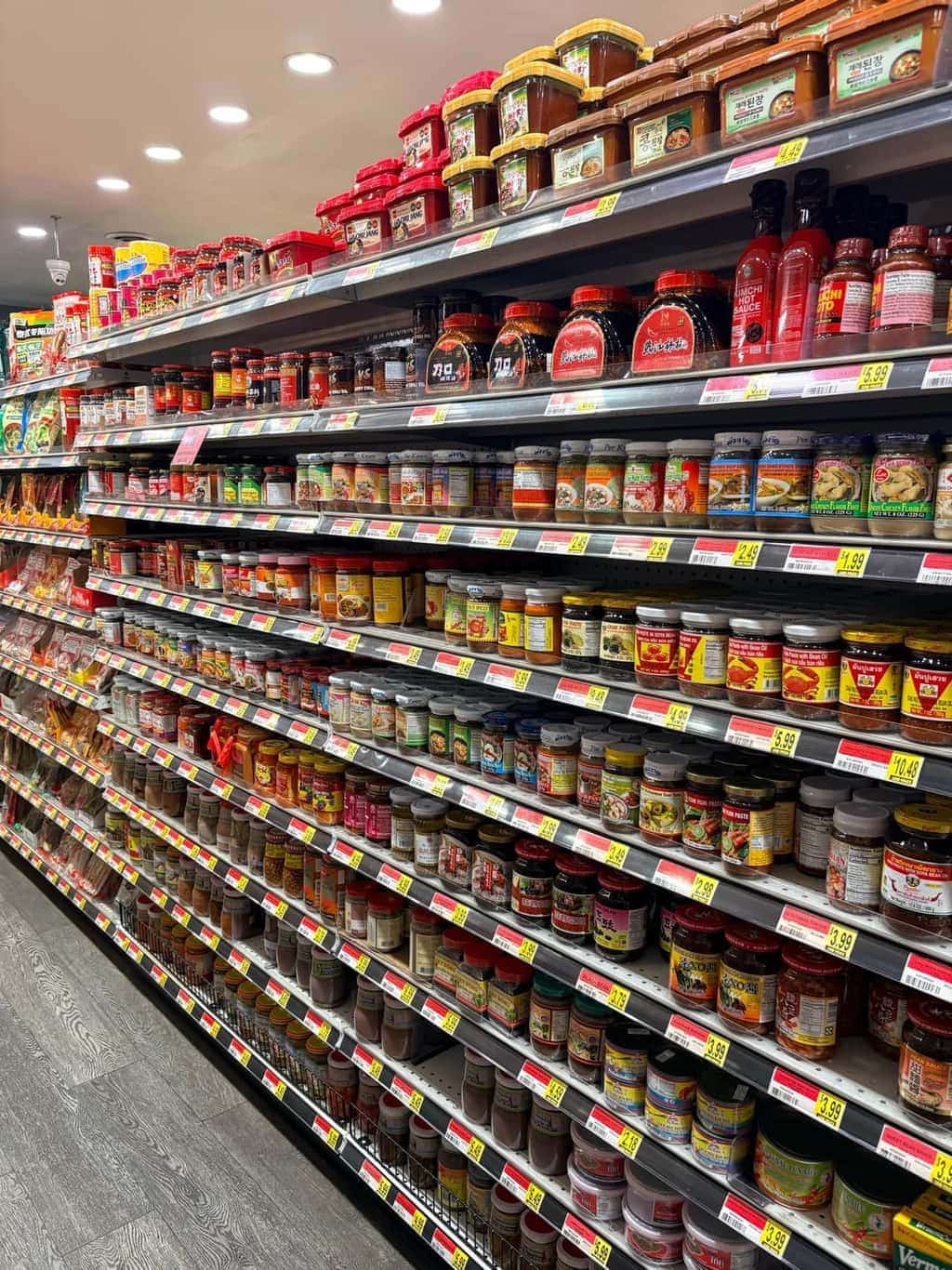
Quick definition
A salty, full-flavored Korean fermented soybean paste used to season soups, stews, vegetables, and dipping sauces.
Doenjang at a glance
- What it is
- A salty, full-flavored Korean fermented soybean paste used to season soups, stews, vegetables, and dipping sauces.
- Also known as
- Korean soybean paste, fermented soybean paste
- Names you may see
- Korean: 된장 (doenjang)
- Cuisine
- Korean
- Typical forms
- Dense brown paste in tubs or jars; smoothness and grain content vary
- Common uses
- Doenjang jjigae, soup broth, ssamjang, vegetable seasoning, and marinades
- Where current matches are located
- Aisle 3 · Noodles, Canned Goods & Seasonings
What is doenjang?
Doenjang is a foundational Korean fermented soybean paste with a strong savory, earthy character.
Traditional production begins with meju, blocks of cooked soybeans that are fermented and aged. The solids become doenjang while the seasoned liquid contributes to Korean soy sauce. Modern retail products may use different processes or include grain, salt, and additional seasonings, so texture and intensity differ by maker.
Doenjang is not simply “brown miso.” It is often saltier, more rustic, and more assertive, with visible soybean texture in some tubs. A spoonful dissolves into water or stock to create a deeply seasoned base for jjigae and guk. It can also be mixed with gochujang, sesame oil, garlic, and other ingredients to make ssamjang for grilled meat and lettuce wraps.
What we carry
These matches come from the same inventory source as our in-store locator. Selection can change; use the locator for the complete current list and exact location.
Doenjang Soybean Paste
17.64 OZ
GroceryAisle 3 · Noodles, Canned Goods & Seasonings
Varieties and forms
Traditional-style doenjang
Often bold and soybean-forward, with a rustic texture and a strong fermented aroma.
Commercial blended paste
Can be smoother and more approachable, sometimes with grain or added seasoning. Read the ingredient panel when you want a soy-only style.
Seasoned stew paste
Some packages are pre-seasoned for jjigae. They may already contain seafood, chile, garlic, or flavor enhancers, so adjust the rest of the recipe.
Ssamjang
A prepared dipping paste commonly built from doenjang and gochujang. It is related but already balanced for wrapping and dipping.
What do you use doenjang for?
Dissolve the paste in hot liquid and taste before adding separate salt or soy sauce. For a smoother broth, press it through a small strainer; for a rustic stew, stir it directly into the pot.
Doenjang jjigae
A compact stew with tofu and vegetables in a deeply seasoned soybean-paste broth.
Ssamjang
A dipping paste for grilled meat, raw vegetables, and lettuce wraps.
Doenjang-guk
A lighter everyday soup that may include greens, radish, mushrooms, or clams.
Seasoned vegetables
A small amount can season blanched greens with garlic and sesame.
Doenjang vs. miso
Both are fermented soybean pastes, but they come from different food traditions and usually produce noticeably different results.
Doenjang
Typically bold, salty, earthy, and sometimes coarse. It anchors Korean soups and stews and is a base for ssamjang.
Miso
Japanese miso is commonly cultured with koji and may emphasize rice, barley, or soybean. White miso can be much sweeter and milder.
Substitution
A strong red miso can provide fermented savoriness in a pinch, but it will not reproduce doenjang exactly. Adjust salt and sweetness carefully.
How should you store and cook with doenjang?
Follow the tub or jar instructions; opened doenjang is commonly refrigerated. Its concentrated salt means a little paste can season a substantial amount of broth.
Start small
Whisk in a spoonful, simmer, and taste before adding more. Salinity differs between brands and between seasoned and unseasoned products.
Use a clean spoon
Keep moisture and food scraps out of the tub and smooth the surface before resealing.
Check the label for allergens
Soy is inherent, and some seasoned versions may contain wheat, seafood, or other ingredients relevant to dietary needs.
Related ingredients
Explore the full korean pantry
See related pantry staples, fresh ingredients, departments, and dishes on our Korean grocery guide.
Doenjang FAQ
Where can I buy doenjang in Escondido?
Use Asian Market Escondido’s live locator and search “doenjang.” It will show current online matches and the in-store location at 850 E. Valley Pkwy.
Is doenjang the same as miso paste?
No. Both are fermented soybean pastes, but their cultures, ingredients, texture, salinity, and traditional uses differ. Doenjang is usually more assertive and earthy.
Is doenjang the same as ssamjang?
No. Ssamjang is a seasoned dipping paste often made with doenjang plus gochujang, garlic, sesame, and sweetening ingredients. Doenjang itself is a base seasoning.
Can I make soup with doenjang?
Yes. It is the defining seasoning for doenjang jjigae and many everyday soups. Dissolve it into hot water or stock and add vegetables, tofu, mushrooms, meat, or seafood.
Find doenjang at Asian Market Escondido
850 E. Valley Pkwy, Escondido, CA 92025. Open 8:00 AM–8:00 PM, seven days a week. Free parking at the door, two minutes off I-15 at Valley Parkway.
- Address
- 850 E. Valley Pkwy, Escondido
- Hours
- 8:00 AM–8:00 PM · 7 days
- Phone
- (760) 735-9650